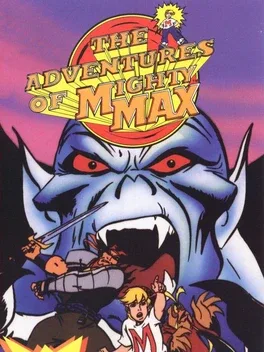
The Adventures of Mighty Max
Introduction
In the early 1990s, the "boy hero" trope was at its absolute peak, and few franchises captured the imagination of children quite like Mighty Max. Originally conceived as a line of micro-playsets designed to compete with Polly Pocket, the brand eventually expanded into a popular animated series. In 1994, developer WJS Design and publisher Ocean Software decided to bring this inter-dimensional adventure to the world of 16-bit gaming. The Adventures of Mighty Max serves as a digital extension of the cartoon, offering fans a chance to don the iconic magic cap and face off against some of the most grotesque monsters in the multiverse. While it arrived during the sunset years of the 16-bit era, it remains a nostalgic touchstone for those who spent their Saturday mornings watching Max outsmart the forces of darkness.
Story & Setting
Following the narrative established in the television show, the game centers on Max, a seemingly ordinary teenager who receives a mysterious package containing a bright red baseball cap. This isn't just a fashion accessory; it is a powerful cosmic artifact that allows the wearer to open portals across space and time. Max is the "Cap-Bearer," tasked with protecting the universe from the demonic Skull Master.
The game's plot kicks off when Skull Master successfully locks most of the portals Max uses for his travels, effectively trapping the hero and preventing him from coming to the aid of those in need across different dimensions. However, the villain’s ego proves to be his undoing. Skull Master has kept a handful of portals open for his own use, utilizing them to store and transport massive doomsday weapons. To save the world, Max must infiltrate these dangerous zones, navigate treacherous terrain, and dismantle Skull Master’s arsenal before the clock runs out.
Gameplay
The Adventures of Mighty Max is a side-scrolling action platformer that emphasizes exploration and objective-based progression over simple combat. Players have the option to control Max himself or his loyal companions: Virgil, the wise Lemurian owl, and Norman, the immortal Viking warrior. While the show gave each character distinct roles, in the game, the choice is purely aesthetic, as the gameplay mechanics remain the same regardless of which hero you select.
The core loop of each level involves navigating complex, multi-tiered environments to locate specific weapon caches belonging to Skull Master. Unlike many platformers of the time that simply required reaching the end of a stage, Max must find and destroy every objective to proceed. This is made significantly more difficult by a strict time limit that adds a layer of urgency to every jump and encounter. Throughout the journey, players will traverse various thematic worlds, ranging from frozen landscapes to fiery industrial pits, all while dodging or defeating a variety of enemy minions. The game’s difficulty is often noted by players as being quite high, primarily due to the precision required in jumps and the relentless pressure of the countdown timer.
This title was developed to take advantage of the 16-bit console hardware available at the time, seeing releases on the most popular systems of the mid-90s.
Legacy
While The Adventures of Mighty Max did not revolutionize the platforming genre, it stands as a fascinating artifact of licensed gaming history. It successfully captured the dark, slightly edgy tone of the animated series, which was known for being more mature than typical children's programming. For many, the game is remembered for its vibrant sprites and the faithful recreation of the show's atmosphere. While it didn't spawn a long-running video game franchise, it remains a collector's item for fans of the Mighty Max toy line and those who appreciate the unique brand of 90s "extreme" adventure. It also highlights the era when Ocean Software was a dominant force in bringing television and film properties to home consoles.
Fun Facts
- The game does not feature any alternative names; it was released under the same title across all regions and systems.
- Although Norman and Virgil are playable, they use the exact same hitboxes and movement speed as Max to ensure the level design remained consistent.
- The original TV show featured the voice talent of Tim Curry as the Skull Master, though the 16-bit hardware of the time could only replicate the character's visual likeness, not his iconic voice.
- Mighty Max was essentially the male-targeted counterpart to Polly Pocket, both of which were created by Bluebird Toys before being acquired by Mattel.